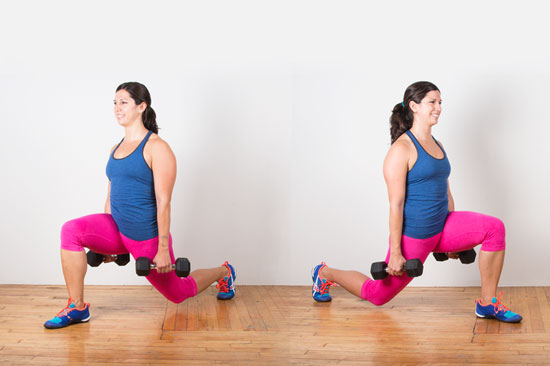
Following on #1, not only is the work concentrated on one leg, you will also be able to identify strength imbalances between the left leg and the right leg. Similar to a dominant hand, we also have a dominant leg and most likely you are stronger on one leg than on the other.
If you have already included single-legged training into your training routine, you will have realized, that if you use the same weight for the left leg as well as for the right leg, you will be able to do more repetitions with one of the two legs. We see this all the time with our athletes, that one leg is stronger than the other leg.
Following on #1, not only is the work concentrated on one leg, you will also be able to identify strength imbalances between the left leg and the right leg. Similar to a dominant hand, we also have a dominant leg and most likely you are stronger on one leg than on the other.
If you have already included single-legged training into your training routine, you will have realized, that if you use the same weight for
the left leg as well as for the right leg, you will be able to do more repetitions with one of the two legs. We see this all the time with our athletes, that one leg is stronger than the other leg.

 Share On Facebook